Why Choice Itself Is Part of the Cure
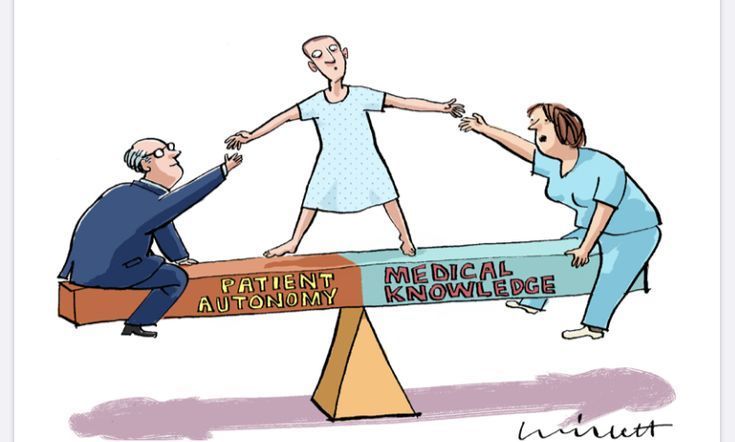
There is a quiet assumption built into most of modern healthcare: that the patient's job is to comply, and the system's job is to decide. The doctor knows. The algorithm ranks. The patient follows.
It turns out this assumption is not just philosophically uncomfortable. It may also be making people less healthy.
What the research actually says
In the 1980s, psychologists Edward Deci and Richard Ryan developed what is now called Self-Determination Theory the idea that human motivation rests on three basic psychological needs: autonomy, competence, and relatedness. When these needs are met, people don't just feel better. They behave differently.
Decades of clinical research have applied this directly to healthcare, and the pattern holds up. Environments that support patient autonomy are associated with greater treatment adherence and better illness control. Patients who feel genuinely involved in decisions about their own care rather than simply told what to do show measurably better outcomes across conditions as different as diabetes management, statin therapy, and dialysis.
In one randomized trial with hemodialysis patients, the group that received care designed around self-determination principles showed significantly higher adherence to diet, fluid intake, and treatment regimens than the group receiving standard care. In diabetes care, patients who felt supported in their own decision-making reported higher self-efficacy and measurably better blood glucose monitoring.
The mechanism researchers point to is communication, not control. When providers explain options instead of issuing instructions, when they listen instead of merely informing, patients participate more and participation itself appears to be part of what makes treatment work.
It is worth being honest about the limits here. This is not a universal law. Some studies on patient-centered care show mixed results, and autonomy support does not help every patient equally. But across a wide and growing body of research, the direction is consistent enough to take seriously: how a decision is made may matter almost as much as what is decided.
The deeper pattern
This finding connects to something larger than medicine. Sound money is sometimes described as changing how people relate to time when currency can't be debased or controlled by someone else, people tend to plan further ahead, save more deliberately, and take more responsibility for their own future.
Something similar may be true of trust. When information is verifiable rather than simply asserted, when a person can see the evidence for themselves instead of being told to believe an authority, they don't just feel better about a decision. They tend to make a different kind of decision one they actually own.
That is not a romantic idea. It is closer to what the adherence research has been quietly suggesting for forty years: people follow through more reliably on choices they made themselves than on choices made for them.
What this means for how we build
This is the reason we have resisted building a recommendation algorithm that ranks providers and tells patients who the "best match" is. Not because ranking is impossible to build it is one of the easier features on the list. But because the moment a system declares a winner, it quietly takes the decision away from the person who has to live with it.
Instead, the goal is simpler and harder: surface real evidence credentials, direct accounts from people who were actually there, clear and honest information about specialty and approach and then step back. Not "this is who you should choose." Just: here is what is verifiable. You decide.
It is a smaller promise than "we know what's best for you." But it may be the more honest one, and if the research holds the more effective one too.

Further reading on Self-Determination Theory and patient adherence:
Self-determination Theory: A Framework for Enhancing Patient-centered Care — ScienceDirect
Do patient autonomy preferences matter? — ScienceDirect, Social Science & Medicine
The role of patient autonomy in medication adherence — Acare HCP Global
Effect of Self-Determination Theory on Treatment Adherence in Hemodialysis Patients — PMC
The Impact of Patient Autonomy Among Uninsured Free Clinic Patients — PMC